
File Access Across Organizations From Day One. No Data Migration Required.
Transaction close and IT integration operate on different timelines. The transaction completes on a fixed date, while directory consolidation, tenant merges, and file server rationalization typically require 12 to 24 months.
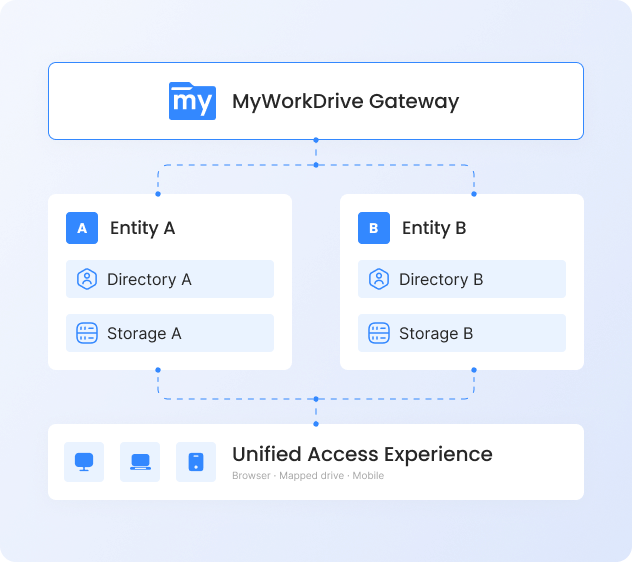
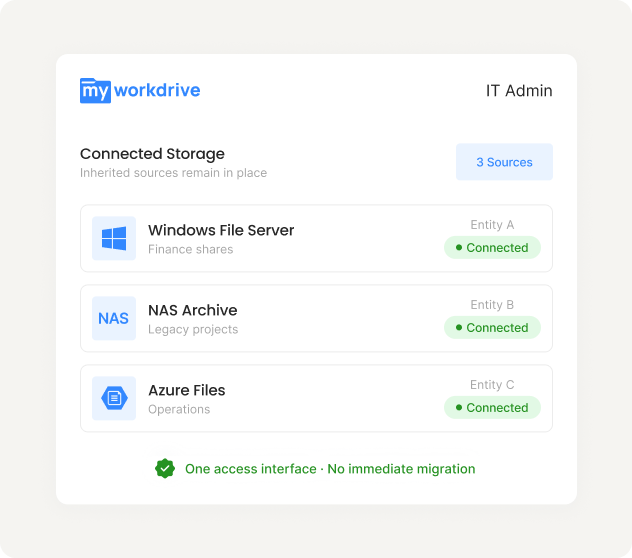
MyWorkDrive addresses the interval. File shares from either organization are published over HTTPS, each user population authenticates against its own directory, and cross-entity access is scoped to specific folders, without a tenant merge, directory consolidation, or relocation of data.
File Access Constraints In Post-Merger IT Integration
01Separate directories, no trust relationship
02Integration timelines exceed transaction timelines
03Premature migration risk
04Divestiture and TSA separation requirements
Cross-domain File Access Requirements During Integration
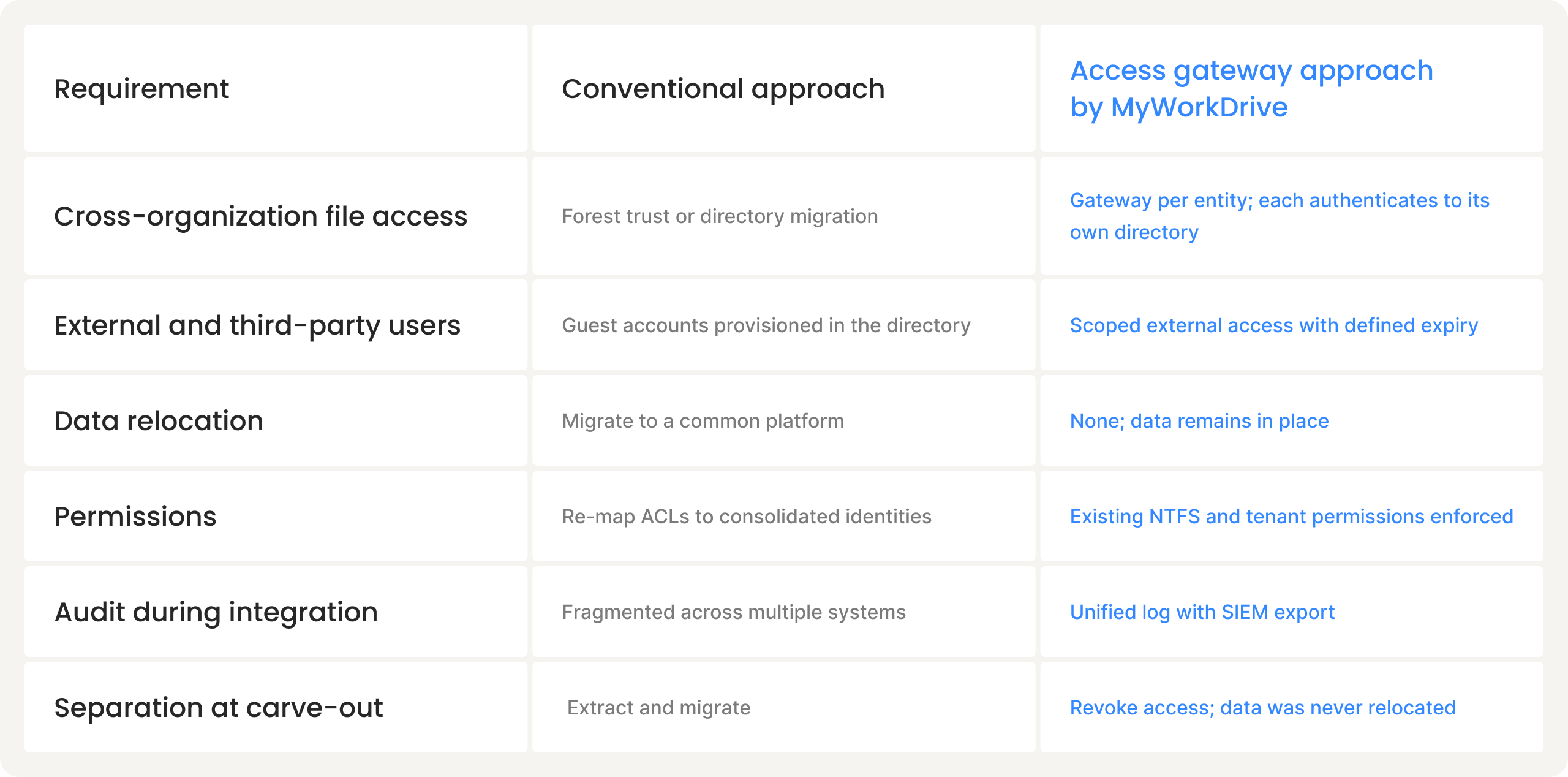
An access gateway is not an integration strategy. It does not merge directories, rationalize the storage estate, or determine target-state architecture. What it provides is separation of user access from infrastructure integration, so that the business obtains working file access at close while IT executes consolidation on a schedule set by the integration plan rather than by user pressure.
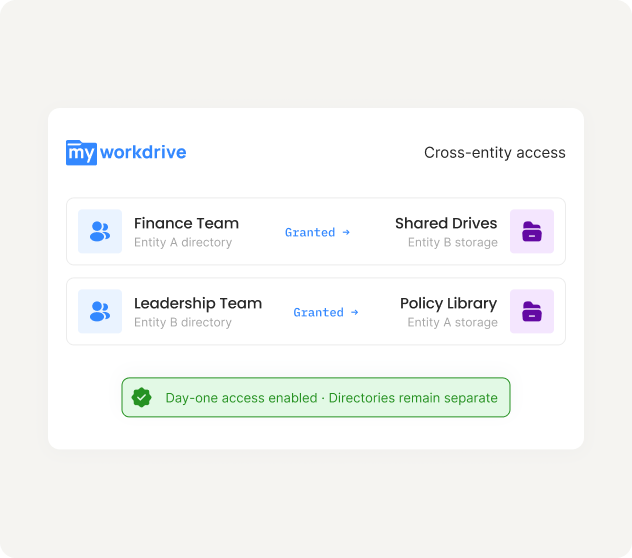
M&A File Access Scenarios: Day One, Diligence, Divestiture
Security And Compliance Controls For M&A File Access
The three questions raised in every integration security review: which directory governs authorization, whether access can be evidenced and revoked, and where data resides.
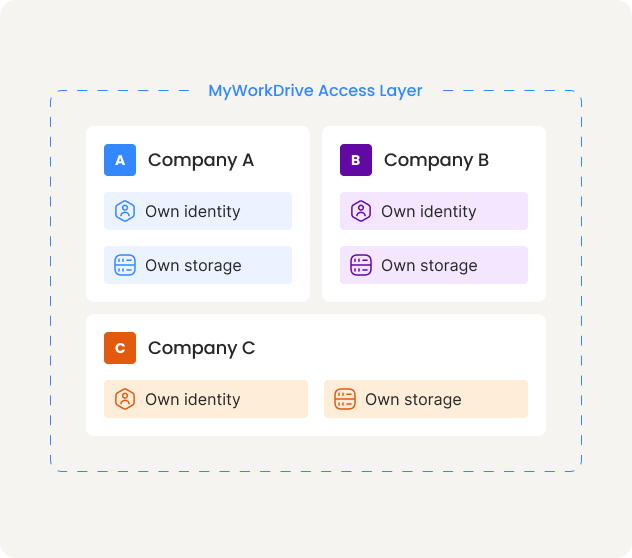
Identity stays with each entity
Each organization authenticates against its own Active Directory, Entra ID, or SAML provider. A gateway is deployed per entity, so no directory merge or tenant consolidation is required.
Learn moreScoped, revocable, evidenced access
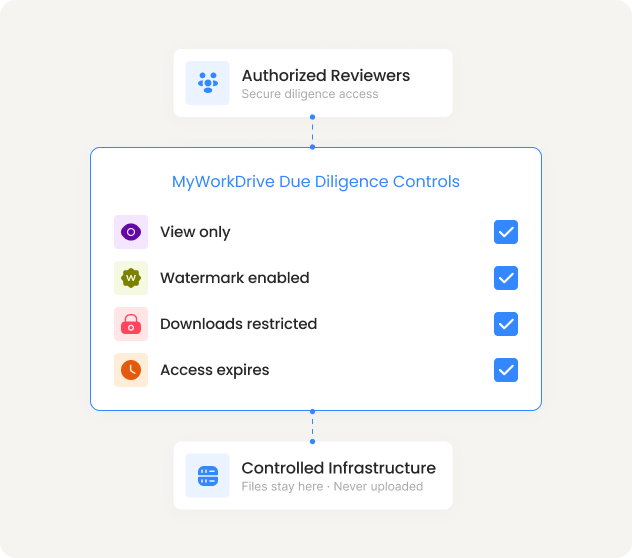
Share and folder-level scoping, watermarking, download restriction, and defined expiry. Every action logged with SIEM export for integration audit or TSA close-out evidence.
Learn moreData residency preserved
Files remain on the originating servers, appliances, tenants, or cloud storage. No copy is created, which preserves residency commitments and regulatory holds through the transition.
Learn moreMergers and acquisitions file access FAQ
How can two merged companies share file access before directories are consolidated?

Each organization deploys a gateway against its own directory, and users reach entitled shares via browser, mapped drive, or mobile client. Neither directory is merged and no data is relocated. Active Directory deployments place the gateway in a resource domain with a trust: two-way trusts support SAML single sign-on, one-way trusts support username and password login.
Should file servers be migrated immediately after an acquisition?
Generally not. Target-state architecture is rarely settled in the opening months, so early migrations are frequently repeated and can compromise audit continuity. Establishing an access layer first allows users to work while the rationalization plan is finalized.
How does this apply to a divestiture or Transitional Service Agreement?
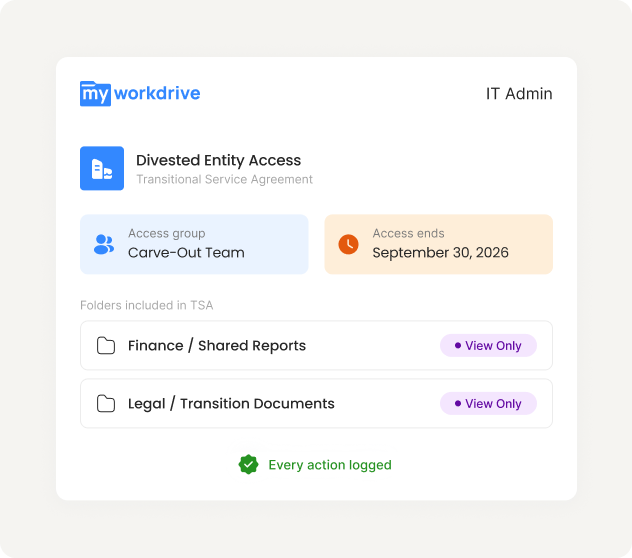
Access for the divested entity is scoped to defined shares and folders for the TSA duration, every access is logged, and access is revoked at the end date. Because no data was copied, separation is an access change rather than an extraction project.
Can an acquired company retain its own Entra ID tenant?
Yes. Each entity may retain its own tenant and identity provider, which suits holding company and private equity structures in which operating companies remain separate by design.
Does this replace Active Directory consolidation?
No. It removes the dependency between user access and directory consolidation, allowing consolidation to proceed on the integration plan's schedule rather than remaining on the critical path for day-one access.
Can it serve as a due diligence data room?
Yes, hosted on infrastructure the organization controls. Watermarking, download restriction, expiring links, and per-file audit records apply to material that never leaves that infrastructure.
Enable Day-One File Access Without A Migration
Secure file access for merging organizations without a tenant merge, directory consolidation, or a data migration.